


Baby Digestion: What’s Normal, What’s Hard, and How Support Can Help

By: Dr. Kristi Hammerle, Year One Wellness Physical Therapist and Certified Breastfeeding Specialist
How Digestion Changes Over the First Year
Did you know a baby’s digestive system can take 3+ months to mature?
At birth, a baby’s gastrointestinal system is fully formed but still learning how to work efficiently. The muscles and nerves that coordinate sucking, swallowing, breathing, and digestion are immature, so feeding and digestion take more effort than they will later in infancy.
One common contributor to feeding challenges is the muscle that helps keep milk in the stomach, which isn’t yet fully developed in early infancy. This can lead to spit-up, reflux, and general feeding discomfort.
At the same time, abdominal muscles are still building strength and coordination, limiting a baby’s ability to generate pressure to move gas comfortably through the intestines.
Because feeding and digestion are closely tied to early motor development, supporting these systems sooner rather than later can make a real difference.
With targeted strategies—like optimizing latch, encouraging trunk and abdominal strength, and using gentle positioning to support gas movement— babies often feed more efficiently and experience less discomfort as their systems mature.
Why Babies Struggle with Reflux/Gas

Generally, there are three most common reasons for reflux/gas issues, including
1) excessive air intake while feeding,
2) limited core control/strength
3) immature GI motility/food allergy.
Air Intake
When a baby takes in excess air during feeds, pressure builds in the stomach, making it harder for milk to stay down and for gas to move comfortably through the intestines.
This can happen when a baby loses their latch seal, struggles to coordinate sucking and swallowing, or tires during feeding
—regardless of feeding method.
Increased air intake often contributes to spit-up, frequent burping, and post-feeding discomfort rather than problems with the milk itself.
Core Control
In early infancy, the abdominal muscles are not yet strong or well-coordinated enough to help move gas efficiently through the digestive system.
Without adequate abdominal engagement, gas can become trapped, leading to straining, arching, or fussiness even when stools are soft and normal.
As babies develop better trunk control through movement and motor milestones, their ability to manage digestive pressure often improves.
Gut Motility/ Allergies
A baby’s digestive tract relies on coordinated muscular contractions to move milk, gas, and stool forward, and these patterns are still inconsistent in early infancy.
Immature motility can lead to slower stomach emptying and uneven gas movement, increasing the likelihood of reflux,
gassiness, and visible discomfort. In some babies, an immature gut lining may also be more sensitive to certain proteins, contributing to feeding intolerance or allergy-like symptoms.
For most infants, digestive discomfort improves as gut motility and nervous system regulation mature over time.
When Support Can Make a Difference
For some infants, small adjustments in feeding mechanics, body organization, and movement can decrease air intake, improve pressure management, and make digestion feel more comfortable during this early stage of development.
Sealed Latch
Supporting a deeper, more stable latch can reduce the amount of air a baby takes in during feeds, lowering gastric pressure that contributes to reflux and gas.
When feeding mechanics are more efficient, babies often fatigue less, feed more calmly, and show fewer signs of post-feeding discomfort.
Core Strength
Improving abdominal engagement and overall trunk organization helps babies generate more effective pressure for digestion and gas movement.
As strength and coordination develop, babies are often better able to tolerate feeding volumes and pass gas with less visible effort.
Supporting this area also aligns with overall motor development, making it a foundational rather than symptom-specific approach.
Gas Relief Strategies
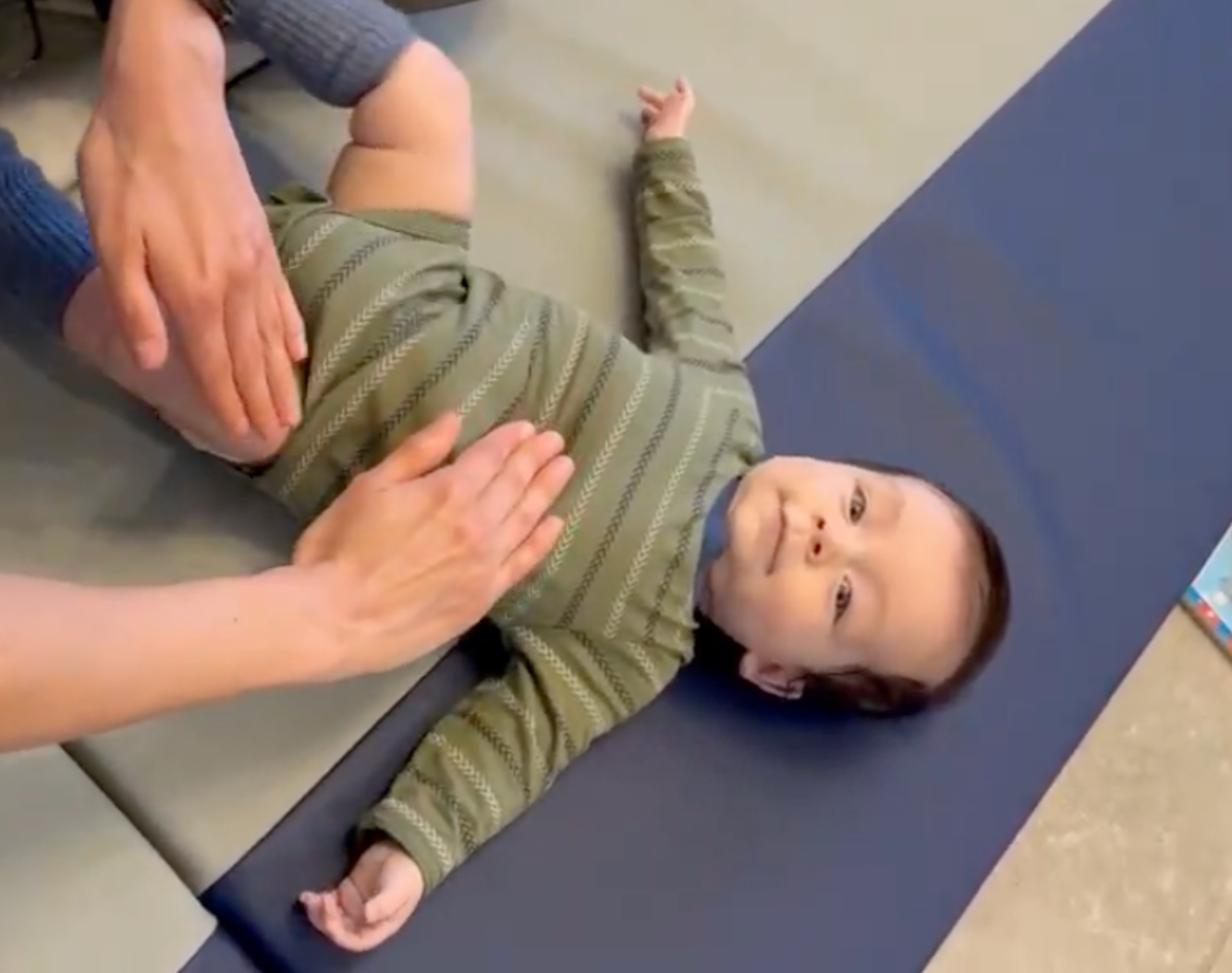
Gentle, developmentally appropriate movement and positioning can help stimulate gut motility and support gas movement.
These strategies work by encouraging natural abdominal activation and variability in posture rather than relying on passive techniques alone.
Over time, this supports a more organized digestive rhythm and improved comfort during and after feeds.
What to Watch For/When to Schedule
If your baby regularly seems uncomfortable during or after feeds, takes in a lot of air, arches or stiffens with feeding or burping, or struggles to pass gas despite normal stools, it may be a sign that feeding mechanics or body organization are placing extra demand on an immature digestive system.
In early infancy, when feeding and movement habits are still highly adaptable, specific support can be a game changer.
At Year One Wellness, we look at how feeding, movement, and digestion work together during
the first year, helping babies feel more comfortable as their bodies continue to mature.
Reach out to us for guidance on how to help your baby be more comfortable in their bodies.
📞 Book a free 15-minute discovery call to find out if it’s a good fit
📍 Year One Wellness is based in Austin, TX, and offers virtual visits in Texas
Warmly,
Your PTs and OTs at Year One Wellness

Continue Reading